
A return item chargeback is a bank fee charged to the person who deposited a check when that check bounces. The bank reverses the deposit and deducts a fee—typically around $12 at most major banks including Bank of America.
A return item chargeback is a fee charged by a bank when a deposited check or payment item is returned unpaid—typically due to insufficient funds, a closed account, or a stop payment order. The bank reverses the deposit and charges the account holder a fee, which can range from $10 to $30 depending on the institution.
Key Takeaways: What You’ll Learn From This Guide
1. A return item chargeback is a fee charged to the depositor—not the check writer—when a deposited item is returned unpaid
2. It is distinct from a credit card chargeback and operates under banking law, not card network rules
3. Bank of America charges approximately $12 per returned item; most major banks charge between $10–$20
4. The fee applies to both returned checks and returned ACH payments
5. Repeated returns can trigger account holds, reviews, or closure
6. Fees can often be waived once as a courtesy for eligible customers
7. Businesses should track return item patterns and consider shifting to lower-risk payment methods
Understanding Return Item Chargebacks
Most people associate the word “chargeback” with credit card disputes. But a return item chargeback is a different mechanism entirely—and it originates on the banking side, not the card network side.
When you deposit a check and that check bounces, your bank doesn’t just reverse the funds. It also charges you a fee for processing a payment item that ultimately failed. That fee is called a return item chargeback.
This affects individuals, small businesses, and merchants who regularly accept checks or ACH transfers. Understanding how it works—and how specific banks handle it—can save you from unexpected account deductions.
How a Return Item Chargeback Works
The process typically follows this sequence:
- You deposit a check or receive an ACH payment into your account
- Your bank provisionally credits your account for the amount
- The check is sent to the payer’s bank for clearing
- The payer’s bank returns the item unpaid (insufficient funds, account closed, stop payment, etc.)
- Your bank reverses the credited amount from your account
- Your bank charges a return item chargeback fee to cover processing costs
The result: you lose the deposit amount and pay an additional fee—even though the failure originated with the payer, not you.
Unlock Faster International Payment Approvals
Unlock smooth and secure international payments with our platform. Experience faster approvals, easy setup, and comprehensive support for global transactions. Take your business to new markets without delays or complicated processes.
Get Started NowCommon Reasons a Check or Payment Gets Returned
- Non-Sufficient Funds (NSF): The payer’s account doesn’t have enough money
- Closed Account: The payer’s account has been closed
- Stop Payment Order: The payer deliberately stopped the payment
- Signature Mismatch: The check signature doesn’t match bank records
- Stale-Dated Check: The check was written too long ago (usually over 6 months)
- Account Frozen: The payer’s account is under a hold or restriction
- Altered or Fraudulent Check: The check shows signs of tampering
Return Item Chargeback: Bank of America Policy
Bank of America is one of the most commonly searched banks regarding this fee, and for good reason—millions of personal and business account holders encounter it.
Bank of America’s Return Item Chargeback Fee
Bank of America charges a return item chargeback fee when a deposited item is returned unpaid. The standard fee is typically $12 per returned item for consumer accounts, though this can vary based on account type and current fee schedules.
For business accounts, the fee structure may differ and is outlined in the Business Schedule of Fees document provided at account opening.
What Bank of America Does After a Return
- The provisional credit is reversed from your account
- The return item chargeback fee is debited automatically
- You receive a notice (by mail or digital alert, depending on your notification settings)
- The returned check is typically not re-presented unless you separately deposit it again
Can You Dispute a Return Item Chargeback at Bank of America?
Yes—if the return was a bank error, you can contact Bank of America directly to dispute the fee. If the return was legitimate (the check genuinely bounced), the fee is generally non-negotiable, though one-time courtesy reversals may be available for long-standing customers.
Return Item Chargeback Fees at Other Major Banks
| Bank | Typical Return Item Fee | Notes |
| Bank of America | ~$12 | Per returned item; business accounts may differ |
| Chase | $12 | Applies to deposited items returned unpaid |
| Wells Fargo | $12 | Consumer accounts; waivable in some account tiers |
| Citibank | Up to $15 | Varies by account type |
| US Bank | $19 | Higher than average for standard accounts |
| PNC Bank | $12 | Standard returned item fee |
| TD Bank | $15 | Per returned item |
| Regions Bank | $15 | Applied per returned deposit |
Note: Fee amounts change periodically. Always verify current fees directly with your bank’s official fee schedule or account disclosure documents.
Return Item Chargeback vs. NSF Fee: What’s the Difference?
These two fees are often confused, but they apply to different parties:
| Fee Type | Who Pays It | Why It’s Charged |
| NSF Fee | The account owner whose check bounced | Charged by their bank for insufficient funds |
| Return Item Chargeback Fee | The person who deposited the bad check | Charged by their bank for processing a returned item |
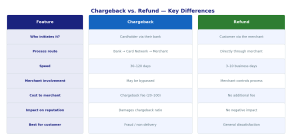
A single bounced check can trigger fees on both ends—the payer pays an NSF fee to their bank, and the payee pays a return item chargeback fee to their bank.
Return Item Chargebacks and Business Accounts
For businesses, return item chargebacks are more than a minor inconvenience. Merchants and service providers who regularly accept checks—and even ACH payments—can encounter these fees frequently.
How This Affects Merchants
- High-volume check acceptance increases exposure to return fees
- Returned ACH payments carry similar fees under different terminology (“ACH return fees”)
- Chargeback patterns can trigger account reviews by banks
- Accumulated fees eat directly into operating margins
Businesses processing payments across multiple channels benefit from having a structured Merchant Management System that tracks payment outcomes, return rates, and fee exposure in one place—especially as payment complexity grows.
ACH Return Fees vs. Return Item Chargeback Fees
ACH (Automated Clearing House) returns work similarly but are governed by NACHA operating rules rather than standard check processing rules. Banks may label ACH return fees differently, but the underlying mechanism—crediting your account, then reversing when the payment fails—is the same.
Common ACH return codes that trigger fees include:
- R01 – Insufficient Funds
- R02 – Account Closed
- R03 – No Account / Unable to Locate
- R04 – Invalid Account Number
- R10 – Customer Advises Not Authorized
How to Protect Yourself from Return Item Chargebacks
For Individuals
- Verify checks before depositing: If a check seems suspicious, confirm with the issuing bank before depositing
- Avoid spending deposited funds immediately: Banks may make funds available before the check fully clears
- Use official payment methods for high-value transactions: Wire transfers and certified checks eliminate return risk
- Enable account alerts: Real-time notifications help you react quickly when a return occurs
For Businesses
- Use payment verification tools: Services that verify check validity or account status before acceptance
- Shift to electronic payments: ACH, card payments, and digital wallets reduce check-related return exposure
- Set check acceptance policies: Define minimum check amounts, require IDs, or use check guarantee services
- Track return rates: Monitor which customers or channels generate the most returns
Understanding how ecommerce payment processing works helps businesses identify where payment failures are most likely and implement the right acceptance strategy for each channel.
What Happens to Your Account After Multiple Return Items?
Repeated return item chargebacks signal risk to your bank. Depending on frequency and amount, banks may:
- Place holds on all deposited items before making funds available
- Reduce or eliminate early availability of deposited funds
- Flag your account for review by the fraud or risk team
- In severe cases, close your account
Banks report payment history to ChexSystems—a consumer reporting agency for banking accounts. A negative ChexSystems record can make it difficult to open new accounts at other banks.
Can You Get a Return Item Chargeback Fee Waived?
In many cases, yes—particularly if:
- It’s your first returned item
- You have a long-standing relationship with the bank
- You have a premium or high-balance account tier
- The return was caused by a third-party fraud or error
The process is typically a direct call to customer service or a visit to a branch. Be prepared to explain the situation and request a one-time courtesy reversal. Banks are not obligated to waive the fee, but many do as a goodwill gesture for qualifying customers.
Legal and Regulatory Context
Return item chargeback fees are governed by several frameworks:
- Uniform Commercial Code (UCC) Article 4: Governs bank deposits and collections in the United States, including rules on return items and timing
- Regulation CC (12 CFR Part 229): Sets fund availability schedules for deposited checks
- NACHA Operating Rules: Govern ACH return processes, timelines, and return codes
- Consumer Financial Protection Bureau (CFPB): Provides oversight of consumer banking practices and fee disclosures
Banks are required to disclose return item fees in their account agreements and fee schedules. If you believe a fee was not properly disclosed, you have grounds to raise a complaint with the CFPB.
Unlock Faster International Payment Approvals
Unlock smooth and secure international payments with our platform. Experience faster approvals, easy setup, and comprehensive support for global transactions. Take your business to new markets without delays or complicated processes.
Get Started NowFrequently Asked Questions
1. What is a return item chargeback?
A return item chargeback is a fee your bank charges when a check or ACH payment you deposited is returned unpaid by the payer’s bank. The bank reverses the deposit and deducts a processing fee from your account.
2. How much does Bank of America charge for a return item chargeback?
Bank of America typically charges approximately $12 per returned deposited item for consumer accounts. Business account fees may vary and are outlined in the Business Schedule of Fees.
3. Is a return item chargeback the same as an NSF fee?
No. An NSF fee is charged to the person who wrote the bad check (by their bank). A return item chargeback is charged to the person who deposited that check (by their bank). Both fees can result from the same bounced check.
4. Can I dispute a return item chargeback fee?
Yes. If the return was due to a bank error, you can dispute it directly. For legitimate returns, you can request a one-time courtesy waiver, especially if you’re a long-standing customer or it’s your first occurrence.
5. How long does it take for a return item chargeback to appear?
Most returns and the associated fees appear within 1–5 business days of depositing the item, depending on how quickly the payer’s bank processes and returns the payment.
6. Does a return item chargeback affect my credit score?
Return item chargebacks don’t directly affect your credit score, but repeated returns can lead to negative ChexSystems records, which may affect your ability to open new bank accounts.
7. What’s the difference between a return item chargeback and a credit card chargeback?
A credit card chargeback is initiated by a cardholder disputing a transaction with their card issuer. A return item chargeback is initiated by a bank when a deposited payment item fails to clear—it involves no card network and no consumer dispute process.
8. Do return item chargebacks apply to mobile check deposits?
Yes. Checks deposited via mobile banking apps are subject to the same return and fee processes as physically deposited checks. The deposit method does not change how returned items are handled.
9. How can businesses reduce return item chargebacks?
Businesses can reduce exposure by verifying checks before acceptance, using electronic payment methods, implementing check guarantee services, and monitoring return rate patterns across payment channels.
10. Are return item chargeback fees regulated?
Yes. Banks must disclose these fees in account agreements under Regulation E and UCC Article 4 guidelines. The CFPB oversees consumer bank fee practices and accepts complaints if disclosures are inadequate.
References & Resources
References & Resources
- Regulation CC – Availability of Funds and Collection of Checks
- Uniform Commercial Code Article 4 – Bank Deposits and Collections
- NACHA Operating Rules and Guidelines
- Consumer Financial Protection Bureau (CFPB)
- Bank of America Personal Schedule of Fees
- ChexSystems Consumer Center
- Federal Deposit Insurance Corporation (FDIC) Consumer Resources