To get an e-commerce merchant account, you must register a legal business, prepare compliance documents, choose a payment provider, submit an application, and pass underwriting. Approval depends on your business model, risk profile, financial history, and adherence to card network and regulatory requirements.
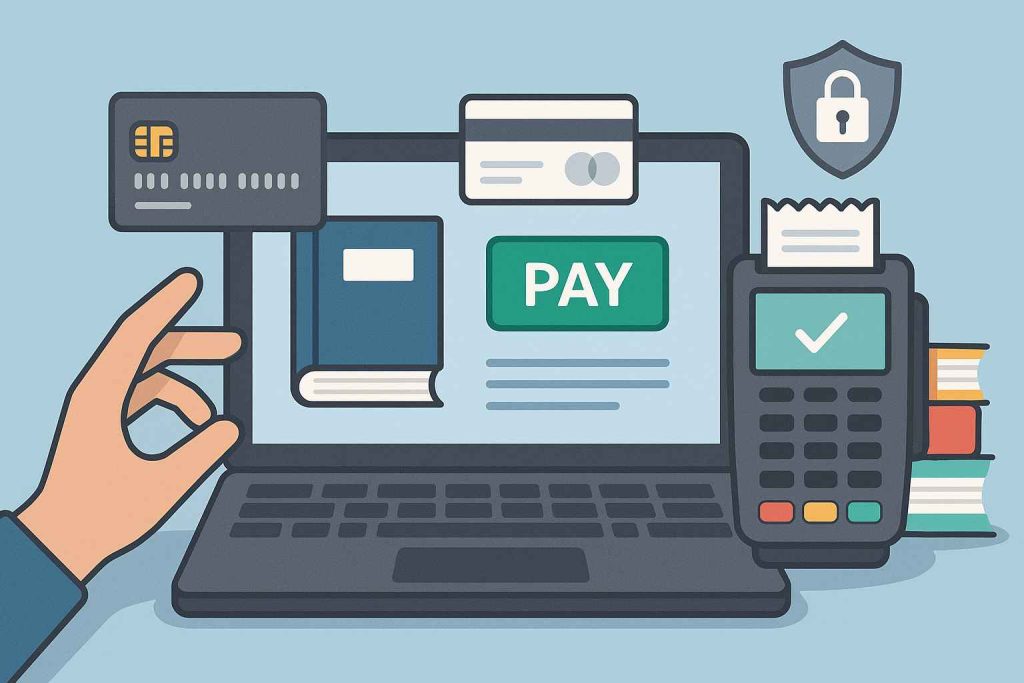
An e-commerce merchant account allows your online business to accept credit and debit card payments securely. Without it, you cannot process card transactions directly on your website.
This guide explains the complete e-commerce merchant account approval process, including requirements, timelines, documentation, common rejection reasons, and practical steps to improve your approval chances worldwide.
Key Takeaways From This Guide
1. An e-commerce merchant account is essential for online card processing.
2. Approval depends on documentation, risk category, and compliance.
3. Website readiness significantly impacts underwriting outcomes.
4. High-risk businesses may face longer timelines and reserves.
5. Preparation and transparency improve approval success rates.
Understanding an E-commerce Merchant Account
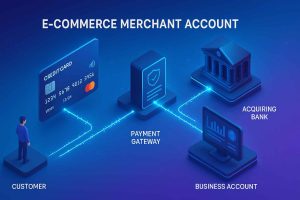
An e-commerce merchant account is a specialized bank account that temporarily holds funds from card transactions before settlement into your primary business bank account.
It connects four key parties:
- Your business (the merchant)
- The acquiring bank
- The card networks
- The customer’s issuing bank
Online merchant accounts differ from retail accounts because they process “card-not-present” transactions, which carry higher fraud and chargeback risk. As a result, underwriting is more detailed.
Search Intent Behind “How to Get an E-commerce Merchant Account”
Users searching this topic typically want:
- Step-by-step application guidance
- Required documentation
- Approval timelines
- Rejection reasons
- Cost expectations
- High-risk vs. low-risk differences
- International eligibility requirement
This article addresses each of these elements comprehensively.
Unlock Faster International Payment Approvals
Unlock smooth and secure international payments with our platform. Experience faster approvals, easy setup, and comprehensive support for global transactions. Take your business to new markets without delays or complicated processes.
Get Started NowStep-by-Step: How to Apply for an E-commerce Merchant Account
Step 1: Register a Legal Business Entity
Before you apply for an e-commerce merchant account, you must:
- Register your business legally
- Obtain required tax identification numbers
- Open a business bank account
- Ensure your domain and website are live
Common structures include:
- Sole proprietorship
- Limited liability company (LLC)
- Corporation
- Partnership
Business structure affects liability exposure, underwriting risk, and document requirements.
Step 2: Prepare Required Documents
Merchant account requirements for online business typically include:
Business Documents
- Certificate of incorporation or business registration
- Articles of association
- Business license (if required locally)
- Tax identification number
- Proof of business address
Financial Documents
- Recent bank statements (3–6 months)
- Processing statements (if previously accepted cards)
- Financial projections (for new businesses)
Owner Verification
- Government-issued ID
- Proof of residence
- Personal bank statements (sometimes required)
Website Compliance Requirements
Your website must include:
- Clear refund and return policy
- Terms and conditions
- Privacy policy
- Shipping policy
- Contact details
- Secure checkout (SSL certificate)
Many applications are delayed because websites are incomplete or non-compliant.
Step 3: Determine Your Risk Category
Underwriters assess risk based on:
- Industry type
- Chargeback likelihood
- Average transaction value
- Sales model (subscription, one-time, digital goods)
- Geographic customer base
For example:
| Risk Level | Examples | Approval Complexity | Processing Fees |
| Low Risk | Physical retail goods | Moderate | Lower |
| Medium Risk | Subscription services | Detailed review | Moderate |
| High Risk | Digital goods, international sales | Extensive underwriting | Higher |
Risk classification directly impacts the e-commerce merchant account approval process.
Step 4: Submit Your Application
When you apply for an e-commerce merchant account, expect to complete:
- Business information form
- Ownership disclosure
- Processing volume estimates
- Bank account verification
- Compliance declarations
Accuracy matters. Inconsistencies between your application and website often trigger delays or rejection.
Step 5: Underwriting and Risk Review
Underwriting is the most critical stage.
The acquiring institution reviews:
- Business legitimacy
- Credit history (in some regions)
- Product/service type
- Refund policy clarity
- Fraud prevention setup
- Compliance with card network rules
Industry best practice resources recommend maintaining chargeback ratios below card network thresholds to avoid restrictions. Professional compliance frameworks such as PCI DSS (Payment Card Industry Data Security Standard) also play a role in approval.
Step 6: Approval, Terms, and Account Setup
If approved, you will receive:
- Processing rates
- Reserve requirements (if applicable)
- Settlement timelines
- Chargeback procedures
- Gateway integration instructions
Settlement typically occurs within 2–7 business days, depending on provider terms.
How Long Does the Approval Process Take?
Approval timelines vary:
| Business Type | Typical Timeline |
| Established low-risk business | 1–3 business days |
| New business | 3–7 business days |
| High-risk category | 1–3 weeks |
Delays usually occur due to incomplete documentation or compliance gaps.
Merchant Account Requirements for Online Business (Global Overview)
While requirements vary by country, most providers require compliance with:
- Anti-money laundering (AML) regulations
- Know Your Customer (KYC) verification
- Consumer protection laws
- Data security standards
You can review official guidelines and standards from regulatory bodies such as:
- Financial Action Task Force
- Bank for International Settlements
For payment security compliance, refer to:
- PCI Security Standards Council
These frameworks influence underwriting globally.
Common Reasons E-commerce Merchant Accounts Get Rejected
Understanding rejection reasons improves approval odds.
2. High Chargeback History – Excessive disputes create liability concerns.
1. Incomplete Website – Missing policies or unclear product descriptions signal risk.
3. Prohibited or Restricted Products – Certain industries require specialized underwriting.
4. Mismatched Business Information – Application details must match legal registration documents.
5. Poor Credit History (where assessed) – Some acquiring banks check creditworthiness.
6. Unrealistic Processing Projections – Overstated revenue expectations can raise concerns.
Unlock Faster International Payment Approvals
Unlock smooth and secure international payments with our platform. Experience faster approvals, easy setup, and comprehensive support for global transactions. Take your business to new markets without delays or complicated processes.
Get Started NowHow to Improve Your Approval Chances
- Keep projected volumes realistic
- Publish transparent refund policies
- Use clear product descriptions
- Implement fraud prevention tools
- Maintain low dispute rates
- Keep financial records organized
- Respond quickly to underwriting queries
Preparation significantly reduces approval delays.
Costs Associated with an E-commerce Merchant Account
Expect these fee types:
- Setup fee (sometimes waived)
- Monthly account fee
- Transaction fee (percentage + fixed amount)
- Chargeback fee
- Rolling reserve (if required)
A rolling reserve is a percentage of revenue temporarily held to offset risk.
Rolling Reserve Explained
| Feature | Description |
| Purpose | Protects against chargebacks |
| Percentage | Typically 5–10% (varies by risk) |
| Duration | 90–180 days |
| Applies To | Higher-risk merchants |
Not all businesses require a reserve.
International Considerations
If operating globally:
- Verify cross-border processing capability
- Confirm multi-currency settlement
- Ensure compliance with regional data laws
- Review tax reporting obligations
Regulatory or governing body documentation in each jurisdiction should be consulted before launching internationally.
Frequently Asked Questions
1. What documents are required to apply for an e-commerce merchant account?
Most providers require business registration documents, bank statements, ID verification, and a compliant website.
2. How long does merchant account approval take?
Approval typically takes 1–7 business days but may extend for high-risk businesses.
3. Can a new business get approved?
Yes. However, new businesses may face additional scrutiny and may be subject to reserves.
4. What is the difference between a payment gateway and a merchant account?
A merchant account holds funds temporarily. A payment gateway transmits transaction data securely.
5. Do I need PCI compliance?
Yes. PCI DSS compliance is mandatory for businesses processing card payments.
6. Why was my application rejected?
Common reasons include incomplete documentation, high-risk classification, or compliance issues.
7. Can I apply without a live website?
Most providers require a functional website before approval.
8. What is a high-risk merchant account?
It applies to industries with elevated chargeback or fraud exposure.
9. Is a personal bank account sufficient?
No. A dedicated business bank account is generally required.
10. How can I speed up the approval process?
Submit complete documentation, maintain transparency, and ensure website compliance.
Choosing the Right Partner
Selecting a reliable provider matters as much as meeting merchant account requirements for online business.
If you’re evaluating options, review the provider’s underwriting transparency, global processing capabilities, reserve policies, and support structure. A structured onboarding process indicates strong compliance standards.
Businesses seeking guidance on documentation, approval strategy, or risk positioning can explore professional support through MyntPay’s merchant services to streamline the application process responsibly.
References & Resources
- PCI Security Standards Council – PCI DSS Documentation
- Financial Action Task Force – AML Guidelines
- Bank for International Settlements – Banking Supervision Frameworks
- Official consumer protection agencies in your operating country
- Industry best practice resources on chargeback management
- Professional compliance frameworks for online financial operations