
E-commerce merchant account fees go far beyond the transaction rate advertised on a provider’s homepage. The real cost includes monthly fees, chargeback penalties, currency conversion markups, PCI compliance charges, and early termination fees that many merchants only discover after signing up. Understanding every fee category before choosing a provider is the single most effective way to protect your margins.
Why the Advertised Rate Is Never the Whole Story
Payment processing is one of the most opaque pricing environments in business services. Providers compete aggressively on headline transaction rates — the percentage displayed prominently in marketing materials — while burying a dozen other charges in contract small print.
A merchant who chooses a provider based on a 1.9% transaction rate, then discovers a $25 monthly fee, a $15 PCI compliance fee, a $35 chargeback fee, and a $0.30 per-transaction authorization fee, ends up paying significantly more than they anticipated. At low transaction volumes, these fixed and semi-fixed charges often cost more than the transaction rate itself. Learn – How ntegrating Subscription Models in Adult Payment Processing
The goal of this guide is to name every fee category, explain what it is, and help business owners calculate total cost of ownership — not just the rate on the brochure.
Key Takeaways: What You’ll Learn From This Guide
1. The advertised transaction rate is never the total cost of a merchant account — authorization fees, monthly charges, chargeback fees, PCI fees, and cross-border fees all add to the real effective rate.
2. Monthly minimums and fixed fees disproportionately impact low-volume and early-stage merchants — total cost of ownership must be calculated against realistic transaction profiles, not best-case scenarios.
3. Chargeback fees apply per dispute regardless of outcome — merchants in categories with elevated dispute rates need to factor this into pricing and fraud prevention strategy.
4. PCI non-compliance fees accumulate silently for merchants who haven’t completed annual validation — completing the SAQ is the simplest way to eliminate this avoidable charge.
5. MyntPay provides transparent fee structures with no hidden monthly charges, no setup fees, and no early termination penalties — giving merchants the cost visibility needed to plan accurately.
6. Early termination fees in multi-year contracts can create significant exit barriers — always confirm contract terms before signing and prioritize providers with month-to-month flexibility.
7. Calculating your effective processing rate — total monthly fees divided by total monthly revenue — reveals the true cost of a provider and enables accurate comparison across alternatives.
Category 1: Transaction Fees
Transaction fees are the percentage (and sometimes flat amount) charged on every successful payment. They’re the most visible cost and the one most merchants focus on. But understanding what’s included in — and excluded from — the transaction fee matters considerably.
Discount Rate
The discount rate is the percentage of each transaction retained by the payment processor. It typically ranges from 1.5% to 3.5% for card payments, depending on the provider, the card type, and the merchant’s risk classification. Read – Security Best Practices for Adult Payment Processing
What many merchants don’t realize is that the discount rate often bundles together three separate underlying costs: the interchange fee paid to the card-issuing bank, the assessment fee paid to the card network (Visa, Mastercard), and the processor’s own markup. In flat-rate pricing models, these are wrapped into one number. In interchange-plus models, they’re separated — which is more transparent but more complex to read.
Authorization Fee
Many providers charge a separate fee each time a transaction is submitted for authorization — regardless of whether the transaction is approved or declined. This per-authorization charge is typically $0.05 to $0.30 and appears in addition to the discount rate.
For merchants with high transaction volumes, this adds up quickly. A store processing 1,000 transactions per month at $0.20 per authorization pays $200 monthly in authorization fees alone — a cost that rarely appears in headline pricing comparisons.
Decline Fees
Some processors charge a fee even when a transaction is declined. The payment system still incurs processing costs for declined authorizations, and certain providers pass these costs to merchants. A merchant experiencing a carding attack — where fraudsters test hundreds of stolen cards against the payment system — can face significant decline fees from a single incident.
Category 2: Monthly and Annual Fixed Fees
Monthly Account Fee (Statement Fee)
Many traditional merchant account providers charge a monthly account or statement fee — a fixed charge that applies regardless of transaction volume. This fee covers account maintenance and statement generation. Typical range: $5 to $30 per month.
For merchants at early stages with low volume, this fee represents a disproportionate cost. A seller processing $500 per month and paying a $25 monthly fee is effectively paying a 5% surcharge on all revenue before any transaction fees are calculated. Read – Adult Payment Processing Regulations
Monthly Minimum Fee
A monthly minimum is a guarantee that the processor collects at least a specified amount in fees from the merchant each month. If your transaction fees in a given month fall below this minimum, you pay the difference.
For example, if the monthly minimum is $25 and your transaction fees total $10 that month, you pay $15 in addition to the actual transaction fees — bringing the total to $25 regardless of your sales performance.
Monthly minimums hit seasonal businesses and early-stage merchants hardest. Slow months that generate minimal revenue also generate penalty fees for not meeting the minimum threshold.
Annual Fee
Some providers charge an annual account maintenance fee on top of monthly fees. This is more common with traditional acquiring banks than modern payment platforms. Annual fees typically range from $50 to $150 and often appear at renewal rather than prominently in initial pricing discussions.
Unlock Faster International Payment Approvals
Unlock smooth and secure international payments with our platform. Experience faster approvals, easy setup, and comprehensive support for global transactions. Take your business to new markets without delays or complicated processes.
Get Started NowCategory 3: Chargeback and Dispute Fees
Chargeback Fee
When a customer disputes a transaction with their bank and the bank initiates a chargeback, the payment processor charges the merchant a chargeback fee — typically $20 to $100 per incident. This fee applies whether the merchant wins or loses the dispute.
The chargeback fee is charged simply for the dispute being initiated, not as a penalty for losing. A merchant who successfully contests every chargeback still pays the fee on each one.
For e-commerce merchants in categories with elevated dispute rates — travel, subscription services, digital products — chargeback fees can become a significant monthly cost line even with strong fraud prevention practices in place. Read – How Stripe, PayPal & CCBill Are Navigating Adult Industry Payments
Retrieval Request Fee
Before a full chargeback is initiated, card networks sometimes issue a retrieval request — asking the merchant to provide documentation related to a transaction. Some processors charge a fee for processing these requests, typically $5 to $15 per occurrence.
Retrieval requests are often precursors to chargebacks. Merchants who receive them frequently may also be building toward chargeback rate thresholds that trigger formal monitoring programs.
Chargeback Monitoring Program Fees
Both Visa and Mastercard maintain formal programs for merchants whose chargeback rates exceed defined thresholds. Entry into these programs — Visa’s Dispute Monitoring Program or Mastercard’s Excessive Chargeback Program — triggers monthly program fees from the card network, passed through to the merchant by the processor.
These fees escalate the longer the merchant remains in the program and can reach hundreds of dollars monthly, separate from standard chargeback fees on individual transactions. In serious cases, they precede termination of processing privileges.
Category 4: Currency Conversion and International Fees
Cross-Border Transaction Fee
When a merchant processes a payment from a cardholder in a different country, card networks charge a cross-border fee that processors typically pass through to merchants. This is separate from the standard discount rate and typically adds 0.4% to 1.5% to the transaction cost.
For e-commerce merchants with international customer bases, cross-border fees can meaningfully erode margins on overseas sales — particularly if this cost wasn’t factored into pricing strategy.
Currency Conversion Fee (Dynamic Currency Conversion)
When a transaction involves currency conversion — a buyer paying in their home currency while the merchant settles in a different currency — a conversion fee applies. This is often presented as an exchange rate markup rather than a named fee, which makes it less visible.
Merchants who don’t scrutinize settlement exchange rates carefully may find a significant portion of international revenue disappearing into conversion markup. Comparing the exchange rate applied to your settlements against mid-market rates reveals the actual conversion cost. Read – The Impact of Chargebacks in Adult Payment Processing.
Multi-Currency Processing Fees
Merchants who want to display prices and accept payments in multiple currencies — offering localized pricing rather than a single currency — may face additional setup or per-currency fees depending on their provider. This is worth clarifying upfront for merchants planning international expansion.
Category 5: PCI Compliance Fees
PCI Compliance Fee
The Payment Card Industry Data Security Standard (PCI DSS) requires all merchants accepting card payments to maintain defined security practices. Some processors charge a monthly or annual PCI compliance fee — covering access to compliance tools, self-assessment questionnaire support, or compliance certification assistance.
Typical range: $5 to $30 per month, or $50 to $150 annually. Not all providers charge this separately; some include compliance support in their standard offering.
PCI Non-Compliance Fee
This is one of the most consequential hidden fees and one of the least discussed. Merchants who haven’t completed their annual PCI compliance validation are typically charged a monthly non-compliance fee — often $20 to $50 per month — until compliance is achieved.
Many merchants are unaware they’re being charged this fee because they didn’t realize PCI compliance required active annual validation, not just a one-time setup. The fee accumulates silently until the compliance questionnaire is completed.
Unlock Faster International Payment Approvals
Unlock smooth and secure international payments with our platform. Experience faster approvals, easy setup, and comprehensive support for global transactions. Take your business to new markets without delays or complicated processes.
Get Started NowCategory 6: Setup and Integration Fees
Account Setup Fee
Traditional processors sometimes charge a one-time setup fee when a new merchant account is opened. Modern payment platforms have largely eliminated this, but it still appears in some provider contracts — particularly those targeting specific industries or providing customized integrations.
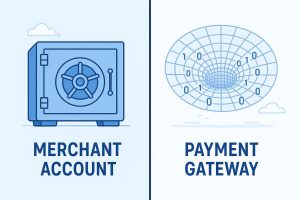
Payment Gateway Fee
The payment gateway is the technology layer that connects a merchant’s website to the payment processing network. Some providers bundle gateway access into their overall fee; others charge a separate monthly gateway fee — typically $10 to $30 per month. Read – Top Payment Gateways for Adult Websites
For merchants using a processor that doesn’t include gateway service, this means maintaining two separate relationships (and two fee structures) — one with the processor and one with the gateway provider.
Integration and Development Fees
Custom integrations, API setup assistance, and technical onboarding sometimes carry one-time or hourly fees. These are more common with enterprise-grade providers but worth clarifying with any provider whose integration requires custom development work.
Category 7: Account Management Fees
Early Termination Fee (ETF)
Merchant account contracts that lock merchants into a term (commonly one to three years) typically include an early termination fee — charged if the merchant closes the account before the contract expires. ETFs range from a flat $200–$500 to a calculated amount representing estimated fees for the remaining contract period.
For merchants whose business model, volume, or provider needs change before the contract ends, this fee can create a significant exit barrier. Always negotiate or confirm contract terms before signing.
Account Closure Fee
Some providers charge a fee to close a merchant account, separate from any early termination penalty. This is less common but worth clarifying, particularly with traditional acquiring banks.
Batch Processing Fee
A batch processing fee is charged each time a merchant “batches” or settles their daily transactions — the process of grouping and submitting transactions for settlement at end of day. Typical cost: $0.05 to $0.30 per batch. Most merchants batch once daily, making this a relatively minor but still real cost.
Category 8: Reserve Requirements
Rolling Reserve
A rolling reserve is not technically a fee but functions like one from a cash flow perspective. Processors withhold a percentage of a merchant’s transaction volume (commonly 5–10%) for a defined holding period (typically 90–180 days) as a buffer against future chargebacks.
The funds are eventually released, but they’re unavailable to the merchant during the holding period. For businesses managing tight cash flow or funding growth from revenue, a rolling reserve has a real financial cost in terms of working capital constraint. Read – How E-Commerce Payment Processing Works
Rolling reserves are more common for high-risk merchant categories, new businesses without processing history, and accounts with elevated chargeback rates.
Unlock Faster International Payment Approvals
Unlock smooth and secure international payments with our platform. Experience faster approvals, easy setup, and comprehensive support for global transactions. Take your business to new markets without delays or complicated processes.
Get Started NowUpfront Reserve
Some processors require an upfront cash deposit held against the account rather than withholding a percentage of ongoing transactions. This is less common than rolling reserves but appears in some high-risk or new merchant account arrangements.
How MyntPay Approaches Fee Transparency
MyntPay is built around the principle that merchants should know exactly what they’re paying before they commit — not after they read the first statement.
The platform operates with a transparent fee structure: competitive transaction rates with no hidden monthly charges for standard accounts, no setup fees, no PCI compliance penalty for completing required annual validation, and no early termination fees that trap merchants in arrangements that no longer serve them.
For e-commerce merchants who’ve previously been caught off-guard by hidden processing costs, MyntPay’s approach to fee clarity is a meaningful operational difference. Before applying, merchants can see the full cost structure — not just the headline rate — allowing accurate margin calculation from day one.
Chargeback management tools are built in rather than charged as add-ons, and international transaction fees are presented transparently rather than buried in exchange rate markups. For businesses with global customer bases, that visibility has direct impact on pricing strategy and profitability.
How to Calculate Your True Payment Processing Cost
Use this framework to assess the real cost of any merchant account:
Step 1 — List all fee categories: Transaction fee + authorization fee + monthly fee + annual fee + PCI fee + chargeback fee + cross-border fee + gateway fee + batch fee
Step 2 — Apply to your actual transaction profile:
- Monthly transaction volume (number of transactions)
- Average transaction value
- International transaction percentage
- Expected chargeback rate
Step 3 — Calculate monthly totals: For each fee category, calculate the monthly cost based on your realistic transaction profile.
Step 4 — Divide total monthly cost by total monthly revenue: This gives your effective processing rate — the true percentage of revenue going to payment costs — which is almost always higher than the headline transaction rate.
Example for a merchant processing $10,000/month across 200 transactions, 20% international:
| Fee Type | Calculation | Monthly Cost |
| Transaction fee (2.5%) | $10,000 × 2.5% | $250.00 |
| Authorization fee ($0.20) | 200 × $0.20 | $40.00 |
| Monthly account fee | Fixed | $25.00 |
| PCI compliance fee | Fixed | $15.00 |
| Cross-border fee (1%) | $2,000 × 1% | $20.00 |
| Batch fee ($0.10) | 30 batches × $0.10 | $3.00 |
| Total monthly cost | NA | $353.00 |
| Effective rate | $353/$10,000 | 3.53% |
The headline rate was 2.5%. The effective rate is 3.53%. That gap represents $103 per month in costs the headline rate didn’t reveal.
Questions to Ask Any Payment Provider Before Signing
Before committing to a merchant account, ask these specific questions and get written answers:
- What is the full monthly fee schedule, including all fixed charges?
- Is there an authorization fee per transaction, and does it apply to declines?
- How are chargeback fees structured, and do they apply regardless of dispute outcome?
- What is the cross-border transaction fee for international payments?
- How is currency conversion calculated — what rate is applied and what’s the markup?
- Is there a PCI compliance fee, and what happens if compliance isn’t validated annually?
- Is there an early termination fee, and what’s the full contract term?
- Is there a monthly minimum, and what happens in months below that minimum?
- How are rolling reserves handled — percentage, duration, and release conditions?
- Are there any fees not covered in the above questions?
Any provider unwilling to answer these questions in writing before you sign is telling you something important about how they handle fee transparency.
Frequently Asked Questions
1. What fees does a merchant account typically charge?
A merchant account typically charges a transaction fee (percentage per sale), authorization fees, monthly account fees, PCI compliance fees, chargeback fees, cross-border fees for international transactions, and sometimes early termination fees. The total effective cost is almost always higher than the headline transaction rate.
2. What is a merchant account monthly minimum fee?
A monthly minimum is a guaranteed floor on fees — if your transaction fees in a given month fall below the minimum, you pay the difference to meet it. It penalizes merchants in slow months and disproportionately affects seasonal or early-stage businesses. Read – How to Get an E-commerce Merchant Account
3. What is a chargeback fee and when does it apply?
A chargeback fee is charged by your processor each time a customer initiates a dispute through their bank. It applies when the dispute is filed — not only when the merchant loses. Fees typically range from $20 to $100 per incident.
4. What is a PCI non-compliance fee?
A PCI non-compliance fee is a monthly charge applied to merchants who haven’t completed their annual PCI DSS compliance validation. It typically ranges from $20 to $50 per month and accumulates until the annual self-assessment questionnaire is completed and submitted.
5. What is interchange-plus pricing?
Interchange-plus pricing separates the interchange fee (set by card networks) from the processor’s markup, presenting both transparently. It’s generally more cost-efficient than flat-rate pricing at higher volumes and more transparent about where fees go. Read – Adult Payment Processing Guide
6. What is a rolling reserve in a merchant account?
A rolling reserve is a percentage of transaction volume withheld by the processor as a risk buffer — typically 5–10% held for 90–180 days before release. It’s not a fee (the money is returned) but constrains working capital during the holding period.
7. How do I calculate my true payment processing cost?
Add all fee categories — transaction fees, authorization fees, monthly fees, PCI fees, chargeback fees, and cross-border fees — and divide the total by your monthly revenue. The result is your effective processing rate, which reveals the true cost beyond the headline transaction percentage.
8. What is an early termination fee in a merchant account?
An early termination fee (ETF) is a penalty charged when a merchant closes their account before the contract term expires. It can be a flat fee ($200–$500) or calculated based on remaining contract fees. Always confirm contract terms before signing. Read – Ecommerce Merchant Account Guide
9. Are there merchant account providers with no hidden fees?
Yes. Modern payment platforms like MyntPay are built around fee transparency — presenting the full cost structure upfront rather than advertising a headline rate while charging additional fees in the contract. Always ask for a complete written fee schedule before committing.
10. What is the difference between a discount rate and an effective rate?
The discount rate is the advertised transaction percentage. The effective rate is the total monthly fees divided by total monthly revenue — including all fee categories. The effective rate is almost always higher than the discount rate and is the number that matters for business margin planning.
References & Resources
- PCI Security Standards Council — PCI DSS compliance requirements and merchant validation documentation: pcisecuritystandards.org
- Visa Interchange Reimbursement Fees — Published interchange rate schedules for merchant reference: visa.com
- Mastercard Interchange Rates and Fees — Published interchange rate documentation: mastercard.com
- Consumer Financial Protection Bureau (CFPB) — Small business payment processing guidance and merchant rights: consumerfinance.gov
- Financial Conduct Authority (FCA) — Payment services regulation and fee disclosure requirements for UK merchants: fca.org.uk
- European Banking Authority (EBA) — Payment services directive fee transparency requirements: eba.europa.eu
- Reserve Bank of India (RBI) — Merchant discount rate guidelines and payment processing fee standards: rbi.org.in
- Federal Reserve — Regulation II — Interchange fee standards and merchant rights documentation (U.S.): federalreserve.gov
E-commerce merchant account fees include transaction rates, authorization fees, monthly charges, chargeback fees, PCI compliance fees, cross-border fees, and potential early termination penalties. The effective processing rate — total fees divided by total revenue — always exceeds the advertised headline transaction rate.