Choosing the right payment processing solution for your e-commerce business comes down to three core decisions: hosted versus non-hosted gateways, local versus international processors, and whether your business needs entry-level simplicity or enterprise-grade flexibility. Each choice directly impacts checkout conversion, compliance obligations, and the cost of every transaction you process.
Why Your Payment Gateway Choice Matters More Than You Think
Most business owners treat payment processing as an afterthought — a technical box to check before launch. That approach costs real money, and often goes unnoticed until chargebacks spike, international sales get blocked, or checkout abandonment climbs without an obvious reason.
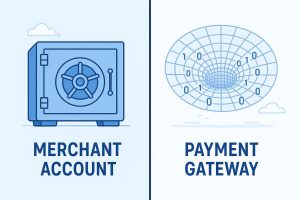
Your payment gateway sits between your customer’s card and your bank account. It validates transaction data, manages fraud screening, routes funds, and communicates with card networks like Visa and Mastercard. A poorly chosen gateway creates checkout friction, introduces security vulnerabilities, and limits your ability to sell across borders. Learn – How ntegrating Subscription Models in Adult Payment Processing
The good news is that the market has matured considerably. There are solid, well-supported options for businesses at every stage — and understanding the landscape makes the decision far less overwhelming.
Key Takeaways: What You’ll Learn From This Guide
1. Hosted gateways — reduce compliance burden but limit checkout control. Non-hosted gateways deliver a better customer experience but require technical resources.
2. Local processors — typically offer better domestic approval rates. International processors are essential for cross-border selling and multi-currency settlement.
3. Small businesses — benefit most from payment facilitators — fast onboarding, no dedicated merchant account required.
4. Growing businesses — should evaluate dedicated merchant accounts once volume justifies the added setup complexity and the fee savings become meaningful.
5. Interchange-plus pricing — is more transparent and cost-effective than flat-rate models at higher transaction volumes.
6. PCI DSS compliance scope — is determined by how you handle card data. Understanding your SAQ type is a prerequisite, not an afterthought.
7. Alternative payment methods — — wallets, BNPL, open banking — are measurable conversion factors, not optional extras, particularly on mobile and in non-Western markets.
Hosted vs. Non-Hosted Payment Gateways
This is the first and most important architectural decision for any e-commerce operator. The two models handle card data differently, carry different compliance implications, and deliver very different customer experiences.
What Is a Hosted Payment Gateway?
A hosted gateway redirects your customer away from your website to a third-party payment page to complete the transaction. The provider owns that page, the SSL certificate, and the full PCI compliance environment. Your store never directly handles card data.
This model is well-suited for:
- New businesses launching without in-house development resources
- Merchants who want to minimise their PCI compliance scope and liability
- Businesses where exact checkout branding is less critical than speed to market
The trade-offs are meaningful, though. Customers leaving your domain — even briefly — can reduce trust and increase cart abandonment. You also have limited control over the payment page’s design, load speed, and mobile optimisation. Read – Security Best Practices for Adult Payment Processing
Unlock Faster International Payment Approvals
Unlock smooth and secure international payments with our platform. Experience faster approvals, easy setup, and comprehensive support for global transactions. Take your business to new markets without delays or complicated processes.
Get Started NowWhat Is a Non-Hosted (Self-Hosted or API-Integrated) Payment Gateway?
A non-hosted gateway keeps the customer on your own domain throughout the entire checkout process. You integrate the payment form directly into your website, and sensitive card data is either tokenised on the client side or transmitted via a secure API call.
This model is best for:
- Established businesses with in-house or contracted development capability
- Merchants who prioritise a seamless, fully branded checkout experience
- High-volume sellers where checkout conversion rates directly impact monthly revenue
The trade-off here is greater technical complexity and a broader PCI DSS compliance scope. Your team needs to ensure the integration remains secure as APIs and security standards evolve. Read – Adult Payment Processing Regulations
The Practical Middle Ground: iFrame and JavaScript-Embedded Solutions
Many modern gateways now offer a hybrid approach. A payment form embeds within your site via an iFrame or a JavaScript library. Customers never visibly leave your checkout, but the provider still owns the card data environment in the background. This approach satisfies most compliance requirements while maintaining a smooth, on-brand checkout flow. It is the most common model for mid-size e-commerce businesses today.
Hosted vs. Non-Hosted: Side-by-Side Comparison
| Factor | Hosted Gateway | Non-Hosted Gateway |
|---|---|---|
| PCI Compliance Scope | Minimal — provider handles it | Higher — merchant involvement required |
| Checkout Experience | Customer redirected to provider | Customer stays on your site |
| Setup Complexity | Low — plug and play | Medium to High — developer required |
| Customisation | Limited to provider templates | Full design and UX control |
| Brand Consistency | Weaker at payment step | Strong throughout checkout |
| Best For | Small or new businesses | Established or technical teams |
Local vs. International Payment Processors
Geography shapes your payment options more than most merchants realise. The processor you choose determines which currencies you can accept, what approval rates look like on domestic transactions, and how much you pay in cross-border fees.
Local Payment Processors
Local processors are licensed and operate primarily within a single country or region. They typically offer better approval rates on domestic transactions, lower cross-border fees, and customer support in the local language. They integrate more naturally with regional banking infrastructure, which can mean faster settlement timelines and fewer unexplained declines. Read – How Stripe, PayPal & CCBill Are Navigating Adult Industry Payments
A business operating entirely within one market — say, a business in the UK selling exclusively to UK customers — may find a domestic processor simpler and more cost-effective than a global alternative.
International Payment Processors
International processors can accept payments in dozens of currencies, manage cross-border settlement, and provide consolidated reporting across multiple markets. For businesses selling globally, or planning to expand, this capability is not optional.
That said, international processors typically charge currency conversion fees, apply different settlement timelines by region, and may hold rolling reserves for newer merchants until a consistent processing history is established.
The Multi-Processor Strategy
Larger e-commerce operations frequently run more than one processor simultaneously. A primary processor handles the majority of volume; a backup processor routes transactions when the primary declines or experiences downtime. This redundancy approach can recover 2–5% of otherwise lost transactions, which compounds significantly at scale. Read – The Impact of Chargebacks in Adult Payment Processing.
Payment Solutions for Small E-commerce Businesses
Small businesses have clearer, more immediate needs: low startup cost, minimal technical complexity, transparent pricing, and fast onboarding. Payment facilitators — often called PayFacs — are the dominant model for this tier.
A PayFac aggregates merchants under a master account with an acquiring bank, removing the need for a dedicated merchant account application. Onboarding takes minutes rather than days, and card payments can be live within hours of signup.
Key features to prioritise at this stage:
- Flat-rate or interchange-plus pricing — easier to forecast costs before your volume justifies negotiating custom rates
- Built-in fraud tools — reduces the need to purchase or manage separate fraud screening services
- Ready-made e-commerce plugins — direct integrations with platforms like Shopify, WooCommerce, or BigCommerce
- No monthly minimums — essential for lower-volume sellers who cannot commit to processing targets
The main limitation is that PayFac-style processors typically hold funds more frequently and have broader account termination policies than traditional merchant accounts. As your volume grows, the economics usually shift in favour of a dedicated merchant account.
Unlock Faster International Payment Approvals
Unlock smooth and secure international payments with our platform. Experience faster approvals, easy setup, and comprehensive support for global transactions. Take your business to new markets without delays or complicated processes.
Get Started NowPayment Solutions for Mid-Size and Enterprise Businesses
As transaction volume rises, the economics and technical requirements change substantially. At this level, a dedicated merchant account, advanced gateway features, and a direct relationship with an acquiring bank become meaningful competitive advantages. Read – Top Payment Gateways for Adult Websites
Dedicated Merchant Accounts
A dedicated merchant account gives you a direct relationship with an acquiring bank rather than operating under a payment facilitator’s umbrella. Approval rates are typically better, fund holds are less common, and fee negotiation becomes possible once you demonstrate consistent monthly volume.
This path requires more documentation upfront — business financials, processing history, sometimes a personal guarantee — but the long-term cost and operational benefits are substantial for businesses processing significant volume.
Enterprise Gateway Features Worth Evaluating
For larger operations, the gateway layer is as important as the processor behind it. Features to evaluate carefully include:
- Advanced tokenisation and card-on-file management — essential for subscription businesses and repeat purchase flows
- Level 2 and Level 3 data processing — reduces interchange fees for B2B card transactions by passing additional line-item data
- Cascading failover — automatically routes declined transactions to a secondary processor in real time
- Real-time reporting and reconciliation APIs — enables direct integration with ERP and accounting systems
- Custom fraud rules and risk scoring — gives your team direct control over fraud parameters rather than relying on a provider’s defaults
Small vs. Enterprise: Key Differences at a Glance
| Merchant Account Type | PayFac / Aggregator | Dedicated Merchant Account |
| Pricing Model | Flat-rate | Interchange-plus or custom negotiated |
| PCI DSS Scope | SAQ A or SAQ A-EP | SAQ D or Level 1 on-site audit |
| Settlement Speed | 1–3 business days | Same-day to 2 days (negotiable) |
| Chargeback Management | Basic dispute tools | Dedicated tools + representment support |
| Integration Method | Plugin or no-code | Full API and SDK integration |
| Multi-currency Support | Limited (often USD/EUR only) | Full multi-currency with regional acquiring |
Understanding Payment Processing Fees
Payment processing fees are intentionally complex. Providers present them in ways that make direct comparison difficult. Here is a clear breakdown of each component:
- Interchange fees — Paid to the card-issuing bank. Set by Visa, Mastercard, and Amex — not your processor. These are non-negotiable and vary by card type, industry, and transaction method.
- Assessment fees — Charged by the card networks themselves (Visa, Mastercard). Also non-negotiable.
- Processor markup — This is where you have room to negotiate. Presented as a flat percentage, a per-transaction fee, or a combination of both. This is the processor’s revenue.
- Gateway fees — Monthly or per-transaction fees for the software and API layer that sits between your website and the processor.
- Chargeback fees — Typically £10–£100 per dispute depending on your processor and monthly volume. These fees apply regardless of whether the chargeback is resolved in your favour.
Interchange-plus pricing is the most transparent fee model available. You see the actual interchange cost and the processor’s margin as separate line items. Flat-rate pricing is simpler to understand but typically more expensive once transaction volume reaches a meaningful level. Read – How E-Commerce Payment Processing Works
PCI DSS Compliance: What E-commerce Businesses Must Understand
The Payment Card Industry Data Security Standard (PCI DSS) applies to every business that accepts card payments. Non-compliance can result in fines from card networks, increased transaction fees, and significantly higher liability in the event of a data breach.
Your compliance level is determined by your annual card transaction volume and how you handle card data:
- SAQ A — Fully outsourced checkout, hosted payment pages. The lowest compliance burden — most small businesses fall here.
- SAQ A-EP — iFrame or redirect-based checkout with some server-side script involvement. One step above SAQ A.
- SAQ D — Full API integration or storing card data on your own systems. The most rigorous self-assessment category.
- Level 1 On-Site Audit — Required for merchants processing over six million card transactions annually. Requires an annual audit by a Qualified Security Assessor (QSA).
The PCI Security Standards Council publishes official self-assessment questionnaires, compliance guidelines, and approved vendor lists at pcisecuritystandards.org. If you are unsure of your compliance scope, engaging a QSA before you scale is worth the investment.
Alternative Payment Methods: Beyond Card Processing
A complete payment strategy accounts for more than Visa and Mastercard. Depending on your market, customer demographics, and average order value, the following alternatives are increasingly important: Read – How to Get an E-commerce Merchant Account
- Digital wallets (Apple Pay, Google Pay) — Significantly reduce checkout friction on mobile, particularly for returning customers. Conversion lift on mobile can be measurable and immediate.
- Buy Now Pay Later (BNPL) — Increases average order value and can improve conversion for higher-ticket items. Popular with younger demographics across Europe and North America.
- Bank transfers and open banking — Growing rapidly across Europe under PSD2 legislation and increasingly common in Southeast Asia. Lower processing fees than card transactions.
- Cryptocurrency payments — Niche for most merchants, but worth evaluating for specific audiences, cross-border use cases, and markets with limited card infrastructure.
The right mix depends on your customer base and the markets you serve. Payment method preferences vary significantly by country. Offering locally preferred payment options directly impacts conversion rates, particularly in markets where card penetration is lower than in Western Europe or North America.
Unlock Faster International Payment Approvals
Unlock smooth and secure international payments with our platform. Experience faster approvals, easy setup, and comprehensive support for global transactions. Take your business to new markets without delays or complicated processes.
Get Started NowHow MyntPay Approaches Payment Processing
At MyntPay, our approach is straightforward: we match businesses with the right payment infrastructure — not simply the most popular option on the market.
Whether you are a first-time merchant looking for a straightforward checkout solution, or an established operation managing multi-currency settlement across multiple regions, the right payment architecture makes a measurable difference to your bottom line.
We work across the full spectrum — from hosted gateway setups to fully custom API integrations — and support both local and international acquiring relationships. To explore how we can help your specific business, visit our payment processing services page. If you are evaluating your current gateway setup or starting from scratch, we are happy to walk you through your options.
Frequently Asked Questions
What is the difference between a payment gateway and a payment processor?
A payment gateway is the technology layer that captures, encrypts, and transmits payment data from your checkout to the financial network. A payment processor is the institution that handles the actual movement of funds between the customer’s bank and your merchant account. In practice, most modern providers bundle both services under one product.
Is a hosted payment gateway secure?
Yes. Reputable hosted gateways maintain PCI DSS Level 1 compliance, handle end-to-end encryption, manage tokenisation, and run continuous fraud screening. For most small businesses, hosted gateways offer a higher baseline level of security than self-managed alternatives — precisely because the provider manages the security environment on your behalf. Read – Adult Payment Processing Guide
Can a small business use an international payment processor?
Yes. Most major payment facilitators support multi-currency acceptance even for smaller merchants. True international acquiring — where the bank processing your transaction is in the same country as your customer — typically requires higher transaction volume or a more established merchant relationship. For most cross-border sales at small-business volume, a global PayFac with multi-currency support is a practical starting point.
What does interchange-plus pricing mean?
Interchange-plus pricing means your processor charges you two separate components: the actual interchange rate (set by the card network — Visa, Mastercard, or Amex) plus a fixed markup that represents the processor’s fee. Because you can see both numbers, this model is far more transparent than flat-rate pricing. At meaningful transaction volumes, it is almost always more cost-effective.
How do I know what PCI compliance level I need?
Your PCI compliance level depends on your annual card transaction volume and the technical method you use to collect card data. The PCI Security Standards Council provides self-assessment questionnaires (SAQs) that walk merchants through identifying their correct compliance scope. If in doubt, consulting a Qualified Security Assessor (QSA) before you scale significantly is the safest approach. Read – Ecommerce Merchant Account Guide
What is a payment facilitator, and how is it different from a merchant account?
A payment facilitator (PayFac) aggregates many merchants under a single master merchant account with an acquiring bank. This eliminates the need for each merchant to apply for their own dedicated account, which dramatically speeds up onboarding. A dedicated merchant account, by contrast, gives you a direct relationship with the acquiring bank, which typically means better approval rates, fewer fund holds, and the ability to negotiate your own fees once you demonstrate volume.
What is payment tokenisation?
Tokenisation replaces sensitive card data — the 16-digit primary account number (PAN) — with a non-sensitive placeholder called a token. The actual card number is stored only within the payment provider’s secure vault. The token has no value outside the system that generated it, which means a breach of your own systems does not expose real card data. Tokenisation is fundamental to modern payment security and is what enables safe card-on-file functionality for repeat purchases and subscriptions.
How long does payment settlement typically take?
Settlement timelines vary by processor, merchant agreement, and risk profile. Most businesses operating with standard payment facilitators receive funds within one to three business days. Enterprise merchants with dedicated accounts and established processing history can often negotiate same-day or next-business-day settlement. Rolling reserves — where a percentage of funds is withheld for a period — are common for new or high-risk merchants regardless of processor type.
What should I look for in a payment processor for a subscription business?
Subscription businesses have distinct payment needs. Prioritise robust card-on-file management, automatic account updater functionality (which refreshes stored card details when cards expire or are replaced), and well-documented recurring billing APIs. Some processors also offer built-in dunning management — the automated process of retrying failed charges and communicating with customers about payment issues — which can meaningfully reduce involuntary churn.
How do chargebacks affect my payment processing account?
Chargebacks occur when a customer disputes a transaction with their issuing bank rather than requesting a refund directly from you. Most processors set a chargeback threshold of around 1% of monthly transactions. Exceeding this threshold can trigger warnings, increased rolling reserves, or in persistent cases, account termination. A proactive chargeback management strategy — clear product descriptions, transparent refund policies, and responsive customer service — is essential from day one.
References & Resources
The following sources provide authoritative guidance on payment processing standards, compliance frameworks, and industry best practices:
- 1. PCI Security Standards Council — Official PCI DSS Documentation, SAQs, and Compliance Guidance
- 2. Visa Merchant Resource Library — Operating Regulations and Interchange Fee Schedules
- 3. Mastercard Rules — Network Operating Rules, Chargeback Guidelines, and Fee Documentation
- 4. Federal Financial Institutions Examination Council (FFIEC) — Payment System Risk and E-commerce Security Frameworks
- 5. European Banking Authority (EBA) — PSD2 Strong Customer Authentication (SCA) Guidelines for EU Merchants
- 6. ISO 20022 — Global Standard for Financial Messaging in Payment Infrastructure
- 7. MyntPay Payment Processing Services — Gateway, Acquiring, and Integration Solutions